
(By Mr. Aayushman Bhatt, Intern at Chamber of Manasi Bhushan and Final year student in the Department of Law, Maharaja Agrasen Institute of Management Studies)
In the complex world of legal proceedings, the stage of pre-trial holds immense significance. It is a stage which is crucial thereby affecting the life of an individual. Interrogation by Law Enforcement Agencies is part of that daunting stage.
The Constitution of India provides every person with a fundamental right to legal representation during trials. But does that right subsist during the pre pre-trial stage i.e. when that Person is not yet made an Accused?
This article sheds light on the aspect of having legal support during the pre pre-trial stage and aims to navigate through the aspect where the presence of a counsel stands as a pillar of belief and hope against injustice and fear of getting violated.

PRE-TRIAL STAGE: INTERROGATION BY SPECIAL LAW ENFORCEMENT AGENCIES SPECIALLY ENFORCEMENT DIRECTORATE
The pre-trial stage starts upon the receiving of information on the commission of an offence. This Special Agency i.e. ED is different from State Police. It has come into existence to examine economic offences like financial scams, money laundering, foreign transaction offences etc. ED is a specialized law enforcement agency that operates under the Department of Revenue, Ministry of Finance, Government of India. Its mandate is the enforcement of economic laws and regulations, focusing on cases related to money laundering and foreign exchange violations under the Prevention of Money Laundering Act, 2002 (PMLA) and the Foreign Exchange Management Act (FEMA). But being different from Police and other Law Enforcement Agencies, it does not allow itself to escape the process of law established under the Constitution of India, and Code of Criminal Procedure,1973.
During its preliminary stage, ED sends a Summon / Notice to a person whom they believe is involved in any activity that goes against their objective and mandate. That the Notice of Summon is sent U/S.37(3) of the Foreign Exchange Management Act, 1999 and U/S.50 of the Prevention of Money Laundering Act, 2002 [as the case maybe], to either produce documents demanded or personal appearance before the Officials for the purpose of Investigation.
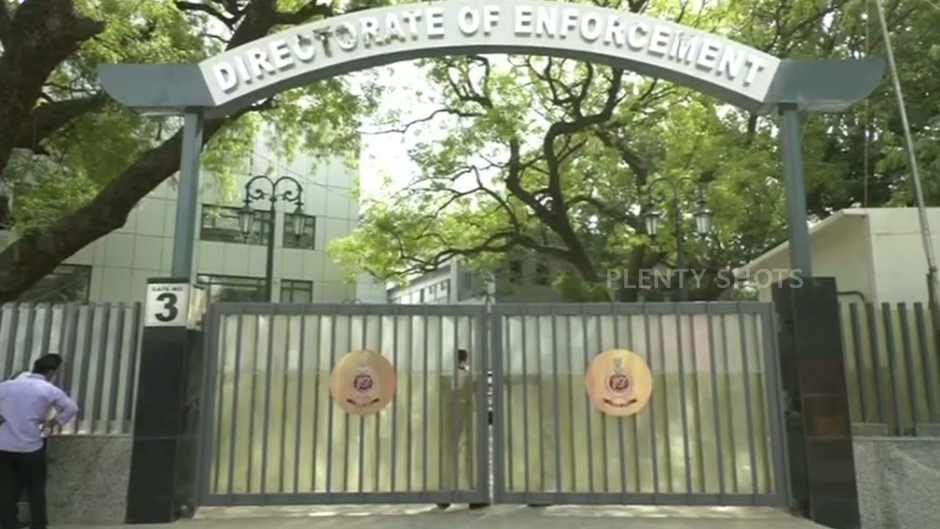
In their said “General Practice”, ED does not allow anyone inside their office. Even the person to whom summons are issued, has to request an entry pass for compliance of the summons. Interestingly, the entry of any Legal Practitioner along with the summoned person is denied citing that the person does not require any Advocate for the purpose of Interrogation. Such denial is not backed up by any law, judgment or internal order. This article analyzes the truth behind an Advocate allegedly cannot present himself / herself during the interrogation of a summoned person.
JUDICIAL OPINIONS
The Indian Judiciary has taken a strong view regarding the presence of an Advocate during the investigation. In Nandin Satpathy Vs. P.L. Dani & Ors. [MANU/SC/0139/1978], the Hon’ble Supreme Court held that Article 22(1) of the Constitution stating the right of the accused / arrestee to consult an advocate of his choice which shall not be denied also includes persons who are not under arrest or custody. The spirit and sense of Article 22(1) is that it is fundamental to the rule of law that the services of a lawyer shall be available for consultation to any accused person under circumstances of near custodial interrogation. Moreover, the observance of the right against self-incrimination is best promoted by conceding to the accused the right to consult a legal practitioner of his choice.
The Hon’ble Supreme Court further observed that Lawyer’s presence is a constitutional claim in some circumstances in our country also, and, in the context of Article 20(3), is an assurance of awareness and observance of the right to silence. The Miranda decision has insisted that if an accused person asks for lawyer’s assistance, at the stage of interrogation, it shall be granted before commencing or continuing with the questioning. We think that Article 20(3) and Article 22(1) may, in a way, be telescoped by making it prudent for the Police to permit the advocate of the accused, if there be one, to be present at the time he is examined. Overreaching Article 20(3) and Section 161(2) will be obviated by this requirement. We do not lay down that the Police must secure the services of a lawyer. That will lead to ‘police-station-lawyer’ system, an abuse which breeds other vices. But all that we mean is that if an accused person expresses the wish to have his lawyer by his side when his examination goes on, this facility shall not be denied, without being exposed to the serious reproof that involuntary self-incrimination secured in secrecy and by coercing the will, was the project.
In Birendra Kumar Pandey & Anr. Vs. Union Of India & Anr. [MANU/SCOR/73756/2023] Hon’ble Supreme Court passed an order holding that the petitioners’ counsel would be allowed to be present at the time of interrogation within visible distance, though beyond hearing distance. Hon’ble Apex Court also observed that the decision which was rendered in Poolpandi’s case (supra) by a Bench of Three Judges, was in the context of the direct involvement of the learned counsel during the actual interrogation where the lawyer assumed an active role during the interrogation. On the other hand, the order that has been sought, as passed in various matters, does not contemplate such an eventuality. In fact, in terms of the orders which we have earlier passed, a lawyer has no role to play whatsoever during the interrogation, except to be at a distance beyond hearing range to ensure that no coercive methods were used during the interrogation. As per the observation of the Apex Court it is clear that the right to consult Advocate is in the scope of Article 22 and it cannot be denied to a person even if he is not Arrested or not declared Accused.
CONCLUSION
In conclusion, the pivotal role of counsel’s presence during the interrogation, specifically at the stage of Pre Trial cannot be overstated, as highlighted in the above-mentioned precedents, legal representation is not only a Fundamental Right provided by the Indian Constitution but also a moral and social safeguard to get prevented from a unforeseeable danger that can lead to conviction of innocent individuals.
Despite having a unique mandate, ED does not get any exemption from the laid down procedures established under the law and by the Hon’ble Supreme Court. The arbitrary practice of denying Legal Representative during Interrogation holds a serious risk of breach of Fundamental Rights of an Individual, increasing a possibility of forced statements made due to Coercion, and abuse of power and law.
Therefore, irrespective of the role of a person in a deemed offence, authorities must respect the fundamental rights of individuals to seek the presence of their Counsels during interrogations. Because it will help in protecting the rights and liberties of every individual who is assisting and cooperating for smooth investigation and values of our Constitution.
